At a Glance:
Understanding Your Room's Audio Personality
The Center Channel: Your Audio Foundation
Voice Matching: Creating Audio Harmony
Decoding Speaker Types and Their Unique Roles
Technical Specifications That Actually Matter
Professional Installation: The Hidden Performance Multiplier
Why Trust Integrated Lifestyles?
Choosing the right home theater speakers can turn your living room into a cinematic experience. But with so many options, where do you even start? Getting the best sound depends on your space, and the right speakers are key to bringing your favorite movies to life.
Home Audio Solutions from Integrated Lifestyles
Discover the ideal audio solutions for your home with Integrated Lifestyles. We offer a wide selection of top brands and certified installers to ensure proper installation and enjoyment of your home audio from day one.
Home AudioUnderstanding Your Room's Audio Personality
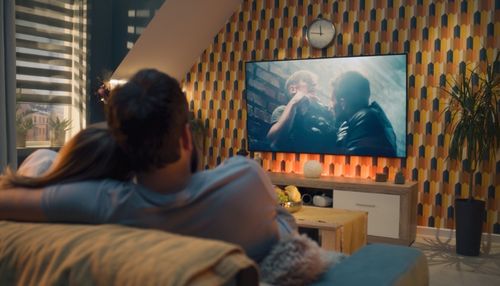
Every space has its own acoustic fingerprint. Walk into a cathedral and whisper, and the sound carries for seconds. Step into a carpeted bedroom, and that same whisper disappears instantly. This principle is essential when choosing home theater speakers.
Large, Open Spaces
For large, open-concept rooms with vaulted ceilings, floor-standing tower speakers are the way to go. These speakers:
- Deliver powerful, robust sound that fills expansive areas.
- Handle demanding audio like action sequences without strain.
- Make movie nights feel as immersive as a theater experience.
Smaller, Intimate Spaces
In smaller rooms, bookshelf or wall-mounted home theater speakers are ideal. They:
- Strike the perfect balance between sound quality and space efficiency.
- Avoid overwhelming the room with unnecessary audio power.
Aesthetic Considerations
The design of your speakers also plays a role:
- In-wall vs in-ceiling speakers offer clean, minimalist looks while maintaining excellent audio quality.
- Statement speakers can double as design pieces, showcasing craftsmanship and sparking conversations.
The key is to match your speaker choice to the size, acoustics, and style of your space. Bigger isn’t always better—it’s about finding the perfect fit for your room and your experience.
Learn more: We're Designing the Custom Home Theater of Your Dreams
The Center Channel: Your Audio Foundation

Here's a revelation that changes everything: the center channel speaker carries approximately 50% of a movie's soundtrack. Dialogue, whispered conversations, and dramatic monologues all flow through this single, essential component.
Without a quality center channel, movies lose their impact. The sound feels thin and lifeless, and dialogue can seem disconnected from the characters on screen, creating a jarring experience that takes viewers out of the story.
Why the Center Channel Matters
- It becomes the voice of every actor and the narrator in documentaries.
- It's the heart of musical performances, delivering clarity and focus.
- Proper placement ensures a natural, immersive sound experience.
Placement Tips
- Position the speaker at ear level when seated to ensure dialogue sounds like it’s coming directly from the actors.
- If mounting higher, choose home theater speakers with aimable tweeters to direct sound precisely to the listening area.
Investment Advice
The philosophy is simple: invest in the best center channel speaker your budget allows. Since you only need one, this is the perfect spot to allocate premium dollars for maximum sound quality and impact.
Voice Matching: Creating Audio Harmony

Imagine attending a concert where every musician played a different style, in different keys, with different timing. The chaos would be unbearable. Home theater speakers face a similar challenge when components from different manufacturers try to work together.
The Solution: Voice Matching
Voice matching addresses this issue by ensuring all speakers in your system come from the same brand and product line. This creates a cohesive audio experience, with benefits like:
- Seamless sound effects: Audio pans smoothly from left to right without interruptions.
- Consistent dialogue: Voices remain clear and uniform across all channels.
- Flowing musical transitions: Scores and background tracks retain continuity, enhancing immersion.
Why Premium Brands Matter
Top brands like McIntosh, Bowers & Wilkins, and Yamaha design their speaker lines with specific acoustic signatures. When these signatures are aligned across your home theater system, they deliver a unified audio experience that outperforms any mismatched setup.
By choosing speakers engineered to work together, homeowners can elevate their listening experience to new heights of clarity, balance, and precision.
Decoding Speaker Types and Their Unique Roles
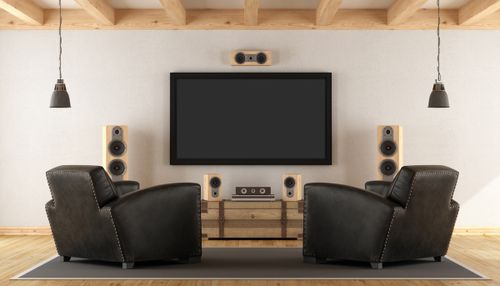
Floor-standing tower speakers are the powerhouses of most home theater systems. These impressive units generate deep, rich bass and handle the full frequency spectrum with authority. In larger rooms, they're indispensable for creating the scale and impact that make action movies feel truly cinematic.
Bookshelf speakers offer remarkable versatility in compact packages. Despite their smaller size, quality bookshelf home theater speakers deliver surprising power and clarity. They excel as front speakers in smaller rooms, surround speakers in larger setups, or anywhere space efficiency is key without compromising sound.
When choosing between in-wall vs in-ceiling speakers, you're often balancing aesthetics with performance.
- In-wall options typically provide more direct sound projection, making them excellent for surround sound applications where precise audio direction is desired.
- In-ceiling speakers are fantastic for ambient audio environments and work particularly well for Dolby Atmos height channels, adding that overhead dimension to your sound.
For truly immersive surround sound, strategic speaker positioning is crucial. Place them 1-2 feet above ear height, angled toward the primary listening position. This creates an enveloping soundstage that makes you feel surrounded by the action, not just watching it unfold.
Technical Specifications That Actually Matter

Speaker sensitivity rating indicates efficiency. Speakers rated 85 dB or higher produce louder sound with less amplifier power, resulting in cleaner audio and less strain on equipment.
Impedance matching ensures optimal power transfer. Most home theater speakers have 4, 6, or 8-ohm ratings to pair seamlessly with standard AV receivers. Mismatched impedance can cause poor performance or equipment damage.
Frequency response shows a speaker's range. For deep bass (below 50 Hz) and detailed treble (above 15 kHz), choose speakers with a wide frequency range for rich, immersive sound.
The Power Equation: Matching Amplification
The right amplifier power dramatically impacts speaker performance. A solid 125 watts per channel offers ample headroom for dynamic peaks and ensures crisp sound even during quiet moments. This highlights the "3-decibel rule": a noticeable increase in volume actually requires doubling your amplifier's power. Moving from 70 to 140 watts truly delivers that audible boost in dynamics. For wireless surround sound systems, efficiency is paramount. Look for wireless home theater speakers that maintain consistent performance as battery levels drop, balancing power with battery life.
Premium Brands and Their Distinct Characters
McIntosh defines American audio engineering. With distinctive blue meters and legendary build, their home theater speakers deliver warmth and musicality for both movies and music, ensuring decades of reliable performance.
Bowers & Wilkins brings British precision to home theater speakers. Their iconic yellow Kevlar drivers and diamond tweeters reveal subtle details while maintaining cinematic dynamic impact.
Yamaha combines Japanese engineering excellence with practical innovation. Their home theater speakers feature advanced materials for maximized performance at accessible price points, with the NS series particularly recognized for premium sound.
Professional Installation: The Hidden Performance Multiplier

Professional speaker installation enhances audio systems by ensuring precise positioning, calibration, and integration. Installers from reliable providers like Integrated Lifestyles optimize performance by accounting for room acoustics and speaker placement.
Home theater speaker placement relies on principles like toe-in angles, height, and wall distance. Hire professional installers from well-known service providers to adjust these factors using specialized tools to meet your superior sound needs.
Speaker tuning takes optimization further. Room correction systems in advanced receivers adjust frequency response, but expertise is key to proper implementation.
Room acoustic treatment elevates performance by using absorption and diffusion materials to manage reflections while maintaining natural sound quality.
Advanced Considerations for Audiophile Performance
Passive vs powered subwoofer choice affects performance and flexibility. Passive subwoofers need external amplification but allow more placement and upgrade options. Powered subwoofers have optimized built-in amplification for better integration and convenience.
A subwoofer's role is crucial for demanding low-frequency effects that create physical impact – thunder, jet engines, or musical foundations. This foundation frees main speakers to focus on midrange and treble without strain.
Multi-subwoofer configurations smooth bass response throughout a room, addressing peaks and nulls of single-subwoofer setups. Two strategically placed subwoofers can provide more even bass than a single, costlier unit.
Learn more: How to Reveal a Hidden Home Theater in Your Living Room
Integration with Modern Home Automation
Modern home theater speakers now integrate with whole-home automation. This means seamless control of audio zones, automated scene settings for entertainment, and voice control via popular platforms.
Smart integration allows lights to dim, shades to lower, and movies to start with one command. Speakers become part of a larger ecosystem, enhancing daily life through automation and intuitive control.
Budget-Conscious Strategies for Maximum Impact
Smart shoppers invest wisely. Begin with quality front speakers and a center channel to build a strong foundation. Add surround speakers later, as your budget allows. This provides immediate, excellent stereo and dialog reproduction, with room for future growth.
Consider your room's natural acoustics before buying premium speakers. Often, a few hundred dollars in acoustic treatment improves sound more than thousands spent on speaker upgrades.
How to Evaluate Speakers Before Purchase
Listening sessions are key. Visit dealers for extended auditions with your own music and movies. Note how speakers handle quiet and loud scenes—both are revealing.
Online reviews offer insights, but preferences vary. Trust your own hearing over popular opinion. Virtual sound tests and manufacturer apps can guide you when in-person auditions aren't possible, providing valuable previews.
Learn more: 3 Ways to Ensure the Perfect Home Theater Projector Setup
Frequently Asked Questions
The 83% rule suggests that speakers sound best when placed at 83% of room width from each side wall. This positioning minimizes boundary reinforcement effects while maintaining proper stereo imaging. The rule provides a starting point for speaker placement, though room-specific acoustics may require adjustments. Professional installers often use this as a baseline before fine-tuning positions based on actual measurements and listening tests.
Room volume determines speaker power requirements and type selection. Rooms under 2,000 cubic feet work well with bookshelf speakers, while larger spaces need floor-standing models for adequate bass response and volume capability. Consider ceiling height as well: vaulted ceilings require more powerful speakers than standard 8-foot heights. Always match speaker sensitivity ratings to available amplifier power, ensuring adequate headroom for dynamic peaks without distortion.
In-wall speakers typically provide more direct sound projection and better imaging for surround effects, making them preferred for side surround positions. In-ceiling speakers excel at creating ambient soundscapes and work particularly well for Dolby Atmos height channels that add overhead dimension to movie soundtracks. In-wall options generally offer better bass response due to larger cabinet volumes, while in-ceiling speakers provide more discreet visual integration. Consider room layout and aesthetic preferences when choosing between these installation methods.
Passive subwoofers offer more flexibility in amplifier selection and upgrade paths, allowing users to match power precisely to room requirements and personal preferences. Powered subwoofers include optimized amplification designed specifically for the driver, often delivering better integration and convenience with less setup complexity. Powered models typically include useful features like automatic on/off switching, phase controls, and room equalization capabilities. For most home theater applications, powered subwoofers provide better value and easier integration, while passive models suit enthusiasts who prefer component flexibility and future upgrade potential.
Why Trust Integrated Lifestyles
Integrated Lifestyles has built a strong reputation for delivering cutting-edge smart home technology with exceptional service. From home automation and entertainment systems and lighting control, our team is dedicated to creating personalized solutions that enhance comfort, convenience, and efficiency. With years of experience and a focus on client satisfaction, Integrated Lifestyles ensures that every project is designed and installed with precision, reliability, and long-term performance in mind.
Shop Smart Home Solutions at Integrated Lifestyles
When it comes to upgrading your home with modern technology, Integrated Lifestyles is your trusted partner. Their wide range of smart home solutions is designed to simplify daily living while elevating your home’s style and functionality. Whether you’re looking for whole-home automation, advanced audio-video systems, or energy-efficient lighting, their experts will help you find the right fit. If you’re ready to transform your home into a smarter, more connected space, reach out to Integrated Lifestyles today to explore how their solutions can meet your needs.